
California’s regulatory framework for online payday loans is designed to protect consumers while preserving access to short-term credit. This article explains the statutory safeguards that apply to online borrowers, the rights available to consumers, and the rules governing fees and disclosure. Many people seeking quick financial relief encounter complex terms that can increase overall cost and risk. Understanding these protections helps borrowers make informed choices and assess lender practices against state requirements.
In addition to summarising statutory safeguards, this article offers practical guidance on how to read lender disclosures, what to verify in an online application, and the types of red flags that may indicate a noncompliant lender. It also explains how borrowers can document interactions and escalate concerns to regulators or consumer advocates. The goal is to translate technical rules into clear steps borrowers can follow to protect themselves while using online loan services.
Key Takeaways
- California law limits loan amounts and interest rates to protect online payday loan borrowers from excessive debt.
- The Department of Financial Protection and Innovation enforces transparency and compliance among payday lenders in California.
- Borrowers have rights to clear fee disclosures, alternative repayment plans, and protection from abusive lending practices.
- Fixed fee structures and regulated returned payment fees ensure predictable costs and fair treatment for borrowers.
- Loan application processes must be transparent, fair, and free from discrimination under California payday loan laws.
- Secure online portals with encryption and multi-factor authentication enable borrowers to manage loans safely and efficiently.
- California’s payday loan protections exceed many other states by emphasizing transparency, fairness, and consumer rights.
- Recent DFPI updates enhance enforcement and transparency but no new mandates were introduced between 2024 and 2026.
- Borrowers can access support and report concerns through the California Department of Financial Protection and Innovation and other resources.
What legal safeguards does California law provide for online payday loan borrowers?
California law provides several safeguards for online payday loan borrowers. Key measures include limits on loan amounts that reduce the risk of unmanageable obligations and caps on interest rates to keep borrowing costs predictable. The law also requires clear disclosure of repayment options and loan terms before a consumer agrees to a loan. For those evaluating immediate funding options, information on instant funding payday loans is available, provided borrowers review the terms and protections carefully.
These safeguards are intended to create a baseline of consumer protections that apply whether the transaction occurs in person or online. By requiring standardized disclosures and limiting certain charges, the law seeks to make lender comparisons more meaningful and to reduce surprises at repayment time. Borrowers should treat the mandated disclosures as a checklist: verify the total repayment amount, scheduled payment dates, any partial-payment policies, and whether the lender offers alternatives to a single lump-sum payment when needed.
How does the California Department of Financial Protection and Innovation regulate payday lenders?
The California Department of Financial Protection and Innovation (DFPI) oversees payday lenders to ensure compliance with state law. The DFPI enforces limits on loan amounts and interest rates and requires lenders to disclose total costs before consumers complete applications. These enforcement actions and disclosure rules are intended to reduce hidden fees and ensure borrowers understand their obligations.
DFPI oversight typically includes licensing reviews, examination of lender disclosures and consumer communications, and investigation of complaints. When borrowers submit well-documented complaints, DFPI can review whether a lender followed required disclosure practices and whether collection practices violated state protections. Borrowers concerned about a lender’s compliance should gather copies of contracts, screenshots of online disclosures, and records of communications before filing a complaint to support a quicker resolution.
Which borrower rights are guaranteed under current payday loan legislation?
Current legislation guarantees several core rights for borrowers. Lenders must provide transparent fee disclosures so borrowers know the full cost of a loan in advance. Borrowers may request alternative repayment plans when available, and they are protected from abusive lending and collection practices. These rights give consumers clearer recourse and support when engaging with online lenders.
Additional rights include the ability to receive written confirmation of loan terms and to obtain copies of records showing payments and balances. Borrowers also have the right to dispute charges and ask for explanations in writing. Knowing and exercising these rights early in the loan process helps protect consumers from practices that obscure the true costs or impose unfair collection tactics.
How are payday loan fees and charges regulated in California?
California law sets maximum allowable fees and requires clear disclosure of those fees to prevent unexpected charges. These rules aim to keep borrowing accessible and transparent so consumers can evaluate costs and compare options before accepting a loan.
In practice, this means lenders must list all fees associated with a loan on the initial disclosure screen and in the executed agreement. Borrowers should check both the summarized disclosure and the detailed contract language, since some platforms present initial summaries that are followed by more technical terms. If discrepancies exist between the summary and the contract, borrowers should request clarification and retain copies of both documents.
What are the fixed fee structures allowed for single payment advance payday loans?
Single payment advance payday loans in California follow fixed fee structures established by law. Lenders typically charge a flat fee tied to the amount borrowed, and the total cost must be disclosed up front. This approach reduces the likelihood of additional undisclosed charges and helps borrowers plan for repayment.
Because the fee is fixed, borrowers can calculate the total repayment and compare it to offers from other lenders. When evaluating options, look for whether the lender prorates fees for shorter loan terms, whether any late or administrative fees apply, and whether prepayment is allowed without penalty. Clear prepayment terms can be especially helpful for borrowers who expect to repay early and want to avoid unnecessary charges.
How is consumer protection ensured for returned payment fees and nonpayment status?
Protections for returned payments and nonpayment are built into state regulation. Lenders are limited in the fees they may charge for returned payments, and they must follow rules that restrict abusive collection practices. These provisions give borrowers a fair process and reduce the risk of harassment when payments cannot be completed.
Borrowers should be aware that fees for returned payments are not unlimited and that lenders must give notice before taking certain collection actions. If a borrower experiences a returned payment, they should contact the lender promptly to arrange an alternative payment method or to request a reasonable repayment plan. Keeping a record of those communications can prevent misunderstandings and support a borrower’s case if the matter is later escalated to a regulator.
What rights and protections do borrowers have regarding loan application and approval processes?
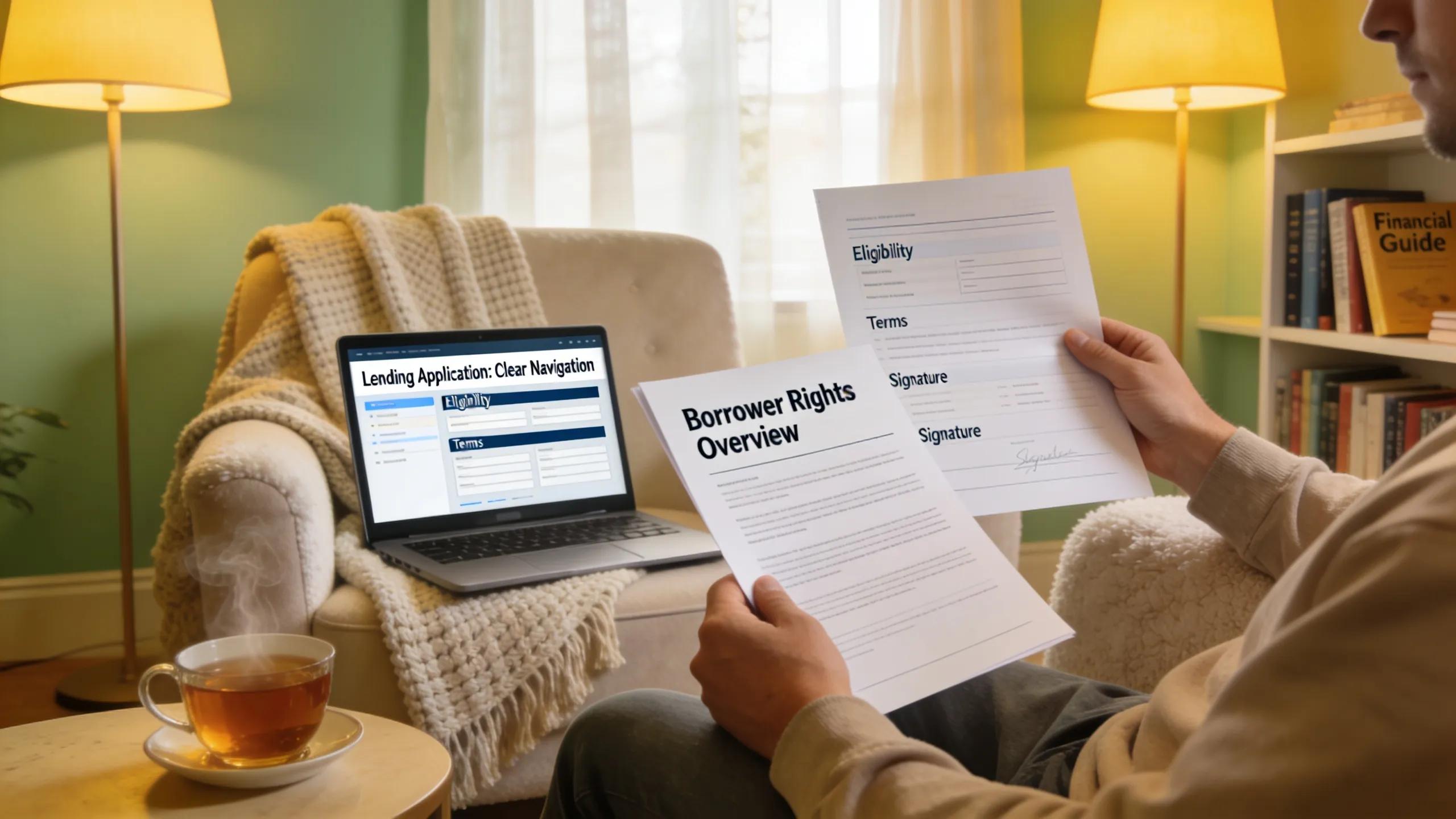
Borrowers are entitled to clear, concise information about loan terms during application and approval. The process must be fair and non-discriminatory, and lenders must provide the disclosures necessary for consumers to assess their options prior to accepting a loan. These protections support equitable treatment and informed decision-making.
Practical steps during application include reading the full terms before proceeding, saving or printing confirmation screens, and verifying that the lender’s contact information and licensing details are included on the site. If the application uses pre-filled data or pulls information from external services, borrowers should confirm what is being accessed and consent accordingly. Consumers who suspect that data was used without disclosure should document the instance and reach out to the lender and, if necessary, to DFPI for guidance.
How does the law require transparency during the loan application?
The law requires lenders to present comprehensive information about interest rates, fees, and total repayment amounts before a borrower submits an application. This pre-contract disclosure enables potential borrowers to compare offers and avoid agreements with unclear or undisclosed obligations.
Look for a clearly labelled disclosure page that summarizes key terms in plain language and provides an avenue to view the full contract. Good disclosures will show total cost of credit, exact payment schedule, any nonrefundable fees, and the lender’s complaints contact. If the lender’s disclosures are vague or hidden behind multiple screens, that is a sign to pause and consider alternatives.
What protections exist against unfair lending practices in online applications?
California law prohibits misleading advertising and manipulative terms in online loan applications. Regulatory oversight monitors lenders for compliance and enforces consumer protections, and trusted resources such as California Online Loans can help borrowers verify practices. These safeguards promote clear, honest communications between lenders and consumers.
Common unfair practices that regulators watch for include failure to disclose the total repayment amount, burying key terms in lengthy legalese, or using deceptive promotional language that implies benefits not supported by the contract. Borrowers encountering such tactics should keep screenshots, note the URL and timestamps, and consider filing a complaint if the lender does not provide timely clarification.
How does California law enable borrowers to manage loans securely through online portals?
California requires online payday lenders to provide secure portals that meet data protection standards so borrowers can manage accounts safely. These systems should protect personal information and give borrowers access to account status, payment schedules, and upcoming due dates to support effective loan management.
When evaluating an online portal, borrowers should verify the presence of secure connections (HTTPS), clear privacy policies, and contact channels for customer service. A transparent portal will also offer an account history feature that shows payments, fees, and balance changes over time. Maintaining a personal record of payments and confirmation numbers provides a duplicate audit trail in case disputes arise.
What features are mandated for 24/7 customer portals to protect borrower data and facilitate loan management?
The law expects 24/7 customer portals to use strong security measures, such as encryption, multi-factor authentication, and regular security audits. These features reduce the risk of unauthorised access and help maintain borrower confidence in online account management.
Additional protective features that benefit borrowers include time-limited sessions, the ability to review and revoke third-party permissions, and clear guidance on steps to take if account credentials are compromised. Portals that offer secure message centers allow borrowers to keep communications in-platform and to maintain an official record of requests and responses from the lender.
How do these portals empower borrowers to control advances and loan repayments?
Online loan portals give borrowers tools to monitor payment schedules, submit payments, and request changes to repayment plans when available. These functions provide greater visibility and control over obligations, helping borrowers avoid unexpected charges. For assistance, borrowers can contact customer support.
Portals often include alerts for upcoming due dates and options to set up automatic payments when desirable. Borrowers should use alert settings to receive reminders well ahead of payment dates and should verify any automatic withdrawal terms before enabling them. If a borrower needs to change a payment method, doing so through the portal usually generates confirmation numbers that are valuable if a dispute occurs.
How do borrower protections under California payday loan laws compare to other online personal loan regulations?
California’s legal framework provides more comprehensive safeguards than many states, with emphasis on clear disclosure, limits on fees and rates, and stronger enforcement. These provisions aim to create a fairer lending environment and set higher expectations for lender conduct and consumer protections.
While regulatory approaches vary across jurisdictions, California’s focus on disclosure clarity and enforcement tools means that online borrowers here often have more formal avenues for complaint and remediation. Consumers relocating from other states should check both California rules and their former state’s regulatory standards, especially if they maintain accounts with out-of-state lenders operating in California.
What are common borrower questions regarding California online loan protections?
Borrowers commonly ask about allowable fees, how to report unfair practices, and what options exist if they cannot repay a loan.
- What fees can lenders charge?: Borrowers often seek clarity on the maximum fees allowable by law to discern acceptable costs before applying.
- How can I report unfair practices?: Knowledge of reporting mechanisms is critical for borrowers who feel mistreated or misled by lenders to contribute to regulatory enforcement.
- What happens if I cannot repay my loan?: Borrowers wish to understand their rights and options if they encounter difficulties in repayment, helping mitigate fears associated with nonpayment.
What fees can California payday lenders legally charge online borrowers?
California limits the fees payday lenders may charge. Generally, lenders may impose a fixed fee tied to the loan amount, and they must disclose the total cost before the loan is finalised. These limits and disclosure requirements protect consumers from unexpected charges.
Borrowers should carefully review each fee line item on the disclosure, including any application fees, processing fees, and charges for returned payments. Some lenders may advertise a simple fee but include additional service or convenience fees; these must still be disclosed in accord with the law. If fees are not clearly presented, a prudent borrower should pause the transaction and ask the lender to provide a full written breakdown.
How do California laws protect online payday loan borrowers from unfair practices?
California law protects borrowers through rules that prohibit deceptive advertising and unlawful collection methods. Consumers can pursue remedies if a lender violates these standards, and regulatory agencies enforce compliance to maintain fair treatment.
Legal protections also cover the timing and content of communications from lenders and collectors. For example, borrowers are protected from harassing contact methods and from communications that misrepresent the legal consequences of nonpayment. If lenders or collectors use threatening language or make inaccurate legal claims, borrowers should record those communications and consult regulatory guidance on next steps.
How do updated DFPI regulations impact California payday loan protections for online borrowers?
Recent DFPI updates have strengthened enforcement and increased transparency requirements for lenders. Greater oversight and clearer disclosure obligations help consumers understand loan terms and enable regulators to address non-compliant practices more effectively.
Enhanced oversight has encouraged some lenders to improve their online disclosures and to adopt clearer customer service procedures. Borrowers who notice improvements in disclosure should still compare multiple offers and document any inconsistencies. If regulatory changes affect a specific practice, lenders are expected to update their terms and site content; borrowers should review updated disclosures before renewing or extending loan agreements.
What new mandates have been introduced between 2024 and 2026 to enhance transparency and compliance?
No specific new mandates were introduced between 2024 and 2026; however, stakeholders should monitor ongoing regulatory developments and DFPI guidance for any changes that affect compliance and consumer protections.
Even in the absence of new mandates, regulatory guidance and enforcement priorities can shift. Borrowers and lenders both benefit from periodic reviews of published DFPI guidance, FAQs, and enforcement bulletins to remain current on what regulators are focusing on and which disclosure practices are receiving attention.
How should borrowers and lenders prepare for evolving legal requirements?
Borrowers should stay informed about their rights and review updates to lending rules periodically. Lenders should adopt proactive compliance measures and maintain transparent disclosures to align operations with current regulations and build trust with consumers.
Practical steps for borrowers include subscribing to regulator newsletters, bookmarking DFPI pages that explain consumer rights, and doing a quick review of lender disclosures before each transaction. Lenders should maintain internal compliance checklists, schedule regular reviews of online content, and provide training to customer-facing staff so that representations made in marketing and support interactions match contract language.
Where can California online loan borrowers find additional support and resources?
Borrowers can access resources from the California Department of Financial Protection and Innovation for guidance on consumer rights. Non-profit credit counselling services also offer assistance with loan management and financial planning. These sources help borrowers use available protections effectively.
Other helpful resources include financial literacy portals and community legal aid clinics that can review contract terms and advise on complaint processes. When seeking assistance, choose organisations that are transparent about their services and any potential costs so the borrower can weigh the benefits of professional help against the expense.
How to contact the California Department of Financial Protection and Innovation for borrower concerns?
Borrowers with questions or complaints can contact the California Department of Financial Protection and Innovation directly. The DFPI provides information on filing complaints and offers guidance on loan products and consumer rights to help resolve issues.
When filing a complaint, include copies of contract pages, screenshots of online disclosures, records of payments, and any correspondence with the lender. Detailed documentation speeds up the review process and improves the chances of a timely response. If a borrower needs assistance compiling a submission, local consumer advocacy groups can often provide direction on necessary documents.
Which consumer portals and websites provide authoritative loan management and protection information?
Authoritative information is available from government-affiliated websites and financial literacy portals that cover regulatory requirements, consumer rights, and best practices for managing loans. These resources help borrowers verify lender claims and understand their options.
Look for portals that clearly indicate their source — such as state agencies, certified non-profits, or recognised financial education institutions — and that provide step-by-step guides for common borrower needs, including how to read a loan disclosure, how to calculate total repayment, and how to file a regulatory complaint.
Frequently Asked Questions
What resources are available for borrowers seeking support with payday loans in California?
Borrowers can consult the DFPI for official guidance on consumer rights and protections. Non-profit credit counselling agencies also provide practical advice on loan management and help explain complex loan terms.
Many non-profit counselling services offer free or low-cost consultations that review your budget, help prioritise payments, and suggest alternatives to new borrowing. When choosing a counselling service, confirm their credentials and whether they operate under a recognised accreditation organisation to ensure reliable advice.
How can I identify a legitimate payday lender in California?
Verify that a lender is licensed by the DFPI and that it discloses fees, rates, and terms clearly. You can confirm licensing through the DFPI’s online database and review customer feedback and complaint records to assess a lender’s reputation.
Other verification steps include checking the lender’s physical business address and customer service phone number, reading independent reviews, and ensuring the online application does not request unnecessary personal data. If a lender resists providing licensing details or redirects you away from a secure site, consider it a warning sign and pause the application.
What should borrowers do if they believe they are a victim of predatory lending?
If you suspect predatory lending, document agreements and communications, then contact the DFPI to file a complaint. You may also consult consumer advocacy groups or legal professionals who specialise in financial disputes to understand available remedies.
Immediate steps include saving copies of the loan agreement, emails, chat transcripts, and screenshots of the online offer. If possible, avoid making further payments until you receive guidance from a counsellor or regulator. Many advocacy groups maintain templates for complaint submissions that can help structure your documentation effectively.
How does California ensure compliance among payday lenders?
California enforces compliance through DFPI oversight, which monitors lender activities and enforces regulations on loan amounts, rates, and disclosures. Violations can result in penalties or sanctions to deter non-compliant behaviour.
Enforcement can include corrective actions, orders to change disclosure language, fines, or other remedies. Public enforcement actions also serve as a source of guidance for other lenders to bring practices into alignment. Borrowers should monitor DFPI announcements for developments that may signal broader industry changes.
What are the implications of not understanding payday loan terms before borrowing?
Not understanding loan terms can lead to financial strain, unexpected charges, and difficulty meeting payment obligations. Borrowers should ask questions, seek clarification, and confirm all terms in writing before agreeing to a loan.
Before signing, consider creating a simple comparison table showing the loan amount, fees, total repayment, and payment dates for each option. This makes it easier to evaluate the real cost and to identify any terms that could create complications later, such as restrictions on early repayment or mandatory payment processing windows.
What is the process for disputing a payday loan charge in California?
Begin by contacting the lender to resolve the issue directly. If that fails, escalate the matter to the DFPI and provide documentation of communications and charges to support the complaint process.
When disputing charges, communicate in writing where possible and request written confirmation of any agreed corrections. If the lender refuses to correct an error, a formal complaint with the DFPI that includes a timeline, copies of communications, and any receipts or bank statements will assist the regulator in its review.
How do recent regulatory updates affect borrower access to payday loans?
Regulatory updates have generally reinforced consumer protections and transparency, which can improve borrower confidence and clarity when evaluating loan offers. Stricter disclosure and enforcement aim to make the lending environment safer and more reliable.
Stronger protections may lead some lenders to change product designs or to refine how fees and payment options are presented. Borrowers should welcome clearer disclosures even if they slow the application process slightly: greater clarity reduces the chance of misunderstanding and costly surprises later on.
Conclusion
Understanding the consumer protections in California payday loan law helps borrowers evaluate offers and assert their rights. Clear rules on fees, rates, and disclosures promote a fairer lending environment and support informed decision-making. Use these provisions and available resources to assess options carefully and manage borrowing responsibly.
Finally, keep organised records of any loan agreement and communications, review lender disclosures carefully before agreeing, and reach out to DFPI or a trusted consumer advocate if you suspect a violation. Staying informed and retaining documentation are simple, effective steps that help borrowers exercise their rights and use short-term credit options more safely.
Share this article:
Related Posts